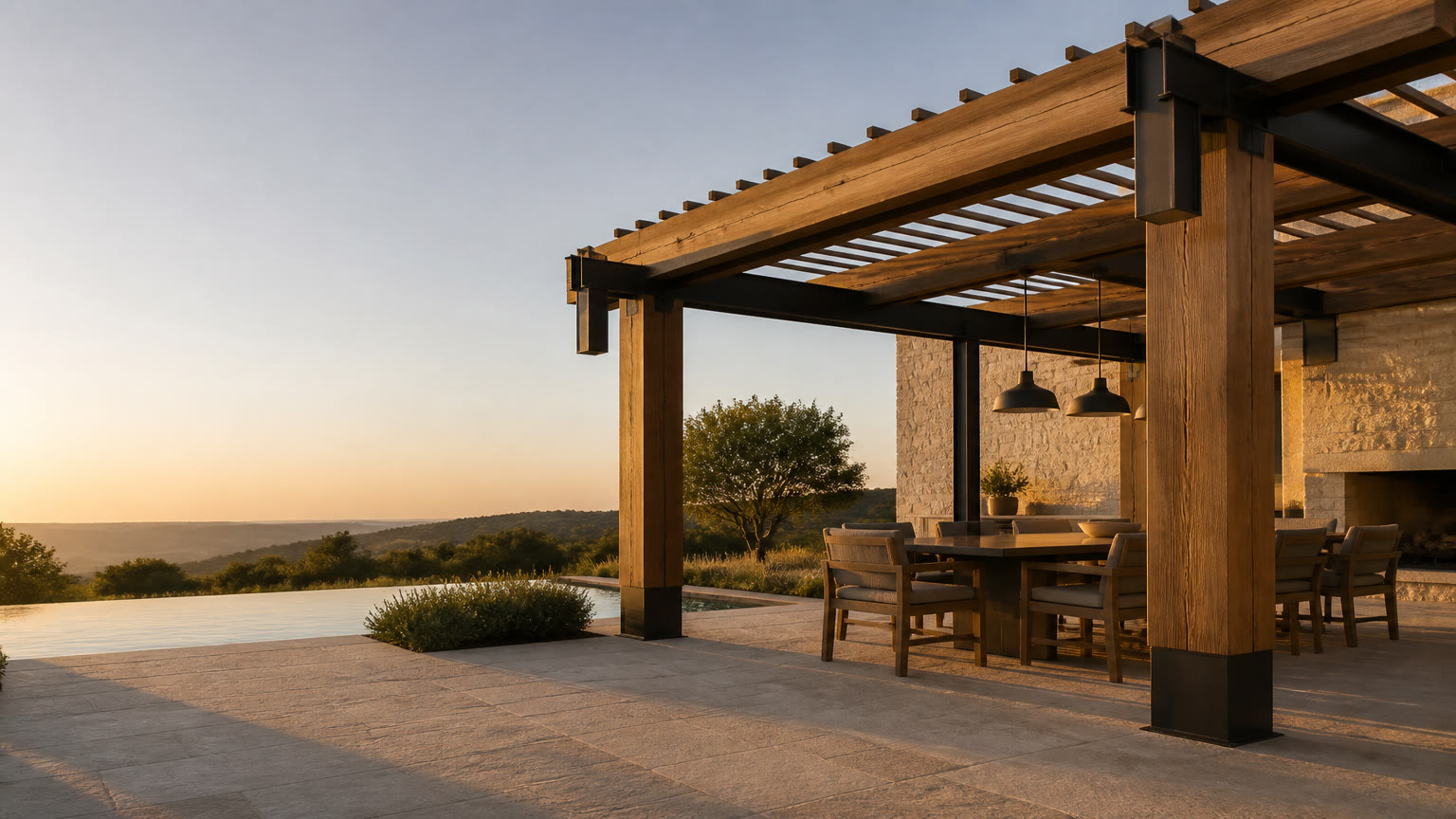


Not Every Pergola Needs an Engineer
Not Every Pergola Needs an Engineer
If you make outdoor structures you have been called engineer-to-order, or configure-to-order, usually by someone who did not stay to explain what that does to a week. The difference is not jargon. It decides how long a quote takes, how often an engineer has to touch a job, and whether a buyer can ever design the thing themselves.
Engineer-to-order
Each order starts as a unique problem. A span, a load, a wall that is not square, a look. Someone designs from something close to zero. Drawings. Feasibility. Then a price. A one-off canopy for a weird rooftop belongs here.
ETO can build almost anything. It is also slow by nature. Your best people become the quoting queue. The sale, the price, and the build can drift because so much of the job lives in a head or a CAD file.
Configure-to-order
You engineered a system once. Size ranges, material pairs, when a center post is required, how cost moves. An order is a selection inside known-good boundaries, not a new invention.
A pergola from 8 to 20 feet, inch by inch, four woods, six finishes, rules for the post: that is configure-to-order. Every unit is different. None of them needs an engineer on Tuesday, because Tuesday's engineering was done last year.
CTO cannot invent the truly novel roof. For the work that is a variation on a theme, it turns a multi-day engineering task into a minutes-long, still personal structure.
When the engineering happens
ETO creates the design per order. CTO reuses a design space you built in advance. Both can be one-of-one. The difference is timing. Fresh each time, or once, in the rules.
That timing is the economics. Complexity in this order, or complexity in the system.
The sloppy line is where the week goes
Most shops are a blend. Repeatable pergolas still go through an engineer just to be safe. The atrium staircase waits behind them. The money is in moving the volume that is really a system out of the ETO lane.
You do not lose custom. You lose the ritual of re-engineering a structure you have already designed a dozen times.
Find the patterns in the last run of jobs. Codify what the engineer actually checks. Put those rules where the buyer is. Keep a clean ETO lane for the genuinely novel roof. The goal is not to kill engineer-to-order. Some yards will always need real design. The goal is to stop paying ETO prices for CTO work.
Mass manufacturing is still the point. One line. Repeatable parts. Real lead times. The input is this yard, not a blank sheet.
The engineers who built your products should be working on the next ones, not re-quoting the last hundred.
Latest